

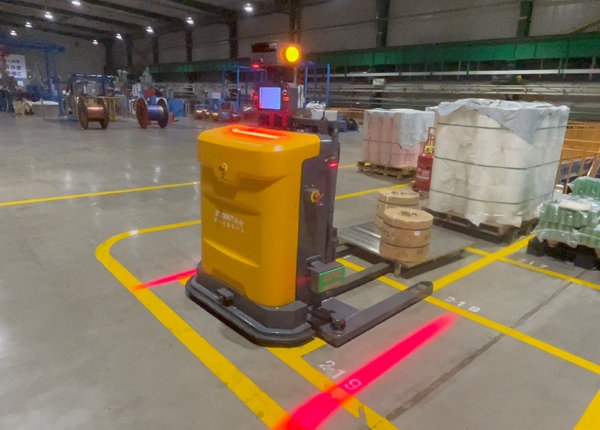
Standard AGV specifications may not fit every warehouse.
A project may require a different fork width, modified chassis dimensions, higher lifting capacity, customized safety sensors or communication with an existing warehouse system.
For buyers importing automated forklifts from China, the difficult part is not simply asking whether a manufacturer can make the modification.
The more important questions are:
Who approves the engineering change? How is it tested? Will it affect the delivery date? And what documentation will the customer receive?
A well-managed customization process should move through a defined sequence:
Requirement → Engineering Review → Design Change → Prototype/Test → Customer Approval → Production → FAT → Shipment
FREE ENGINEERING SUPPORT Stop Gambling on Generic Platforms. Get an AGV/AMR Tailored to Your Warehouse.Buying automated guided vehicles involves complex safety standards (CE/ANSI), navigation setups (Laser SLAM), and ERP system integration. Don't risk your factory safety with middle-men. ✓ 100% Direct Factory: Customized payload up to 5 Tons. ✓ Free CAD Simulation: Send us your layout, and our engineers will simulate the optimal AGV routes. ✓ Global Support: Overseas installation guidance & local maintenance partners. |
Potentially, but the timing of the request is critical.
Changing a dimension during the early engineering stage may be relatively straightforward.
Changing it after fabrication has started can affect:
Mechanical drawings
Structural calculations
Purchased components
Welding fixtures
Hydraulic components
Fork assemblies
Safety sensor positions
Cable routing
Vehicle software parameters
Testing procedures
Production scheduling
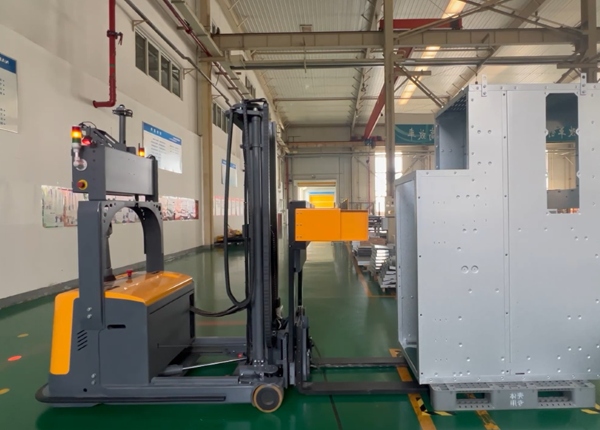
For example, changing fork width may appear to be a simple mechanical modification.
However, the change can also affect the vehicle's ability to approach pallets, the sensing area around the forks and the software parameters used during pickup and placement.
Instead of communicating the change informally through email or messaging, ask the Chinese manufacturer to create a formal engineering change request.
The document should identify:
Original specification
Requested specification
Reason for change
Engineering impact
Cost impact
Schedule impact
Safety impact
Required testing
Customer approval
Final revision number
This creates a clear record of what the factory is actually manufacturing.
The manufacturer should first determine whether the requested width is compatible with:
Fork carriage
Mast structure
Hydraulic system
Pallet dimensions
Vehicle stability
Load center
Safety sensors
Mechanical clearances
The change may also require a new drawing revision.
For a high-lift automated forklift, the load center is particularly important.
Changing fork geometry can alter how a pallet is supported and may influence the vehicle's load-handling characteristics.
Therefore, the engineering department should approve the change before production continues.
A revised CAD drawing confirms the intended geometry.
It does not necessarily prove that the completed AGV performs correctly.
For significant mechanical changes, require the manufacturer to identify the corresponding validation test.
Software customization should be handled with the same discipline as mechanical engineering changes.
Suppose the AGV needs to communicate with a customer's:
WMS
ERP
PLC
Automatic door
Conveyor
Elevator
Pallet handling equipment
A software patch may affect the communication sequence between multiple systems.
The manufacturer should first define:
Input → Processing → Output → Expected Result
For example:
WMS task → Fleet system → AGV dispatch → Pickup → Delivery → Confirmation
The test should verify not only normal operation but also abnormal conditions.
Include:
Communication loss
Duplicate task
Invalid task
AGV unavailable
Emergency stop
Device timeout
PLC failure
Network interruption
Server restart
AGV reconnection
Task recovery
This is particularly important if the customized software will control material movement automatically.
Yes.
Ideally, the software integration should be validated before the equipment leaves China.
The manufacturer can conduct a factory integration test using:
Simulation software
Test servers
PLC test equipment
Virtual WMS interfaces
Representative AGV hardware
The customer should receive the test results before approving shipment.
For major integrations, a useful process is:
FAT → Customer review → Issue correction → Regression test → Final sign-off → Shipment
This reduces the risk of discovering a communication problem after the equipment arrives at the destination warehouse.
It can.
The schedule impact depends on whether the modification affects an existing standard design or requires substantial engineering work.
A relatively simple customization might involve:
Fork dimensions
Sensor position
Software parameters
Color
Minor mounting changes
A more substantial modification could involve:
Chassis redesign
Higher lifting height
Increased payload
Mast redesign
Counterweight changes
Custom attachments
Structural reinforcement
The second category may require additional engineering calculations, component procurement and testing.
When approving a customization, request the manufacturer to provide:
| Milestone | Required Information |
|---|---|
| Engineering review | Completion date |
| Drawing release | Revision/date |
| Component procurement | Lead time |
| Prototype/build | Completion date |
| Factory testing | Test date |
| FAT | Customer approval date |
| Final production | Completion date |
| Shipment | Estimated shipping date |
This makes the schedule impact visible instead of leaving it as a vague statement such as “the customization may take longer.”
For a customized Chinese AGV project, documentation should be agreed upon during the procurement stage.
Depending on the customization, useful documents may include:
General arrangement drawing
Chassis drawing
Fork dimensions
Mast dimensions
Load-center information
Wheel arrangement
Overall vehicle dimensions
Mounting locations
Electrical schematic
Wiring diagram
I/O list
Component list
Safety circuit diagram
Connector information
System architecture
Communication protocol
API documentation
Interface definitions
Network diagram
Error-code list
Software version information
AGV traffic interface
WMS communication specification
PLC interface
Elevator interface
Automatic-door interface
Charging-station interface
The exact documentation package should match the scope of customization.
This depends on the customer's engineering requirements.
PDF drawings may be sufficient for maintenance records and general dimensional verification.
Native CAD files can be more useful when the customer needs to:
Integrate the AGV into facility drawings
Check clearance
Design docking stations
Design safety barriers
Plan charging areas
Validate rack interfaces
If native CAD files are required, specify the required format in the purchase agreement.
For example, the project may require:
STEP
DWG
DXF
SolidWorks-compatible files
The manufacturer should also identify which files are proprietary and which can be released to the customer.
A simple approval workflow can prevent many disputes.
The customer submits the requested modification.
The Chinese manufacturer's engineering team evaluates:
Feasibility
Safety
Structural impact
Software impact
Cost
Lead time
The manufacturer provides updated drawings and technical specifications.
The customer approves the revised design before manufacturing proceeds.
The factory builds according to the approved revision.
The modified AGV is tested against the agreed acceptance criteria.
The customer reviews the results.
Only after the agreed FAT requirements are satisfied should the equipment be released for shipment.
This is where the production stage becomes important.
A modification requested after:
Components have been purchased
Welding has started
The mast has been assembled
Wiring has been completed
Software has been deployed
may generate additional cost and delay.
The manufacturer should explain exactly what has already been completed and what must be rebuilt or replaced.
Ask for a written impact statement covering:
Additional Cost + Additional Lead Time + Additional Testing + New Delivery Date
This gives the buyer a factual basis for deciding whether to proceed.
For significant modifications, no.
A verbal agreement can create ambiguity over:
Final dimensions
Software version
Responsibility for testing
Delivery date
Warranty coverage
Additional costs
All major changes should be reflected in a controlled document or revised purchase specification.
The final production unit should have a clearly identifiable revision.
Before shipment, the customer should ideally have a final technical package showing:
Approved vehicle configuration
Final mechanical drawings
Final electrical configuration
Software version
Interface version
Component list
Safety configuration
FAT results
Outstanding issues
Customer approval
Final revision number
This documentation becomes valuable later when the fleet needs:
Maintenance
Software updates
Replacement parts
Additional vehicles
Site modifications
Troubleshooting
Without configuration records, it can become difficult to determine exactly which version of the AGV was originally delivered.
For customized vehicles, the contract or technical agreement should clearly define:
Final vehicle specifications
Custom engineering requirements
Approved drawings
Software modifications
Integration interfaces
FAT requirements
Documentation requirements
Production milestones
Change-control procedure
Additional customization costs
Delivery schedule
Warranty implications
Final software version
Final hardware configuration
Customer sign-off procedure
This converts customization from an informal sales promise into a measurable engineering commitment.
The biggest mistake when purchasing a customized AGV from China is treating engineering modifications as simple changes to a quotation.
A change to the fork, chassis, mast, sensor configuration or software can affect other parts of the vehicle.
A more reliable process is:
Requirement → Engineering Review → Revised Design → Customer Approval → Production → Testing → FAT → Documentation → Shipment
For B2B AGV procurement, the final objective is not simply receiving a vehicle that looks like the requested configuration.
The objective is receiving a vehicle whose mechanical design, software configuration, safety functions and documentation all match the approved engineering revision.
📖 AGV Forklift Guide — Essential manual for selection and safety.
⚙️ How AGV Systems Work — A deep dive into navigation and logic.
⚖️ AGV vs. AMR Comparison — Choosing the right technology for your facility.
💰 AGV Cost and ROI — Evaluating investment and payback periods.





 Chinese
 English