


For a warehouse evaluating autonomous forklifts, sustainability should not be treated as a marketing claim.
After an AGV fleet is installed, the warehouse operator can collect operational data that helps quantify energy consumption, equipment utilization, battery performance and potential carbon reductions.
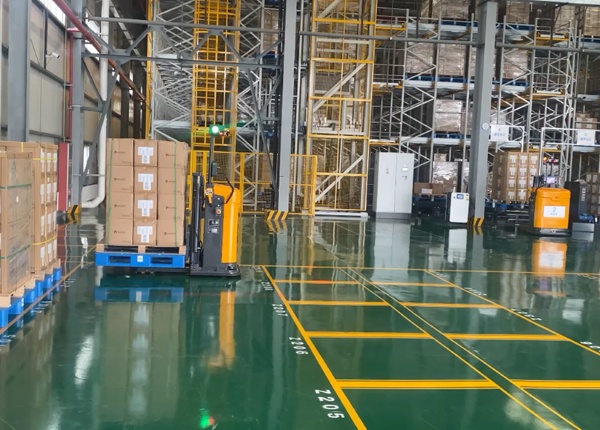
This is particularly useful for companies with ESG reporting requirements or facilities that are trying to reduce dependence on internal-combustion forklifts.
A Chinese electric AGV fleet can provide a useful data foundation, but the actual sustainability benefit must be calculated from measured operating data rather than assumed savings.
FREE ENGINEERING SUPPORT Stop Gambling on Generic Platforms. Get an AGV/AMR Tailored to Your Warehouse.Buying automated guided vehicles involves complex safety standards (CE/ANSI), navigation setups (Laser SLAM), and ERP system integration. Don't risk your factory safety with middle-men. ✓ 100% Direct Factory: Customized payload up to 5 Tons. ✓ Free CAD Simulation: Send us your layout, and our engineers will simulate the optimal AGV routes. ✓ Global Support: Overseas installation guidance & local maintenance partners. |
A modern autonomous forklift fleet can potentially provide data such as:
Electricity consumed per vehicle
Charging duration
Charging frequency
Battery state of charge
Battery utilization
Operating hours
Travel distance
Number of pallet movements
Idle time
Task completion time
Fleet utilization
Maintenance events
The exact data available depends on the vehicle controller, battery-management system and fleet-management software.
For an enterprise sustainability program, the most useful approach is to connect energy data with warehouse output.
Instead of asking only:
“How much electricity did the AGVs use?”
ask:
“How much electricity did the AGVs use per pallet moved?”
That produces a much more useful operational sustainability metric.
Suppose the fleet consumes a measured amount of electricity during a defined operating period.
The warehouse can calculate:
Total AGV electricity consumption ÷ Total pallets transported
This produces an energy-per-pallet metric.
For example, if a fleet consumes 1,200 kWh during a month and completes 6,000 pallet movements, the measured energy intensity would be:
0.20 kWh per pallet movement
The calculation should ideally distinguish between:
Loaded travel
Empty travel
Lifting
Standby
Charging losses
This makes it easier to compare different operating strategies.
Energy consumption alone does not tell you whether a fleet is efficient.
A fleet that consumes more electricity but moves significantly more pallets may have a lower energy intensity.
For warehouse sustainability reporting, metrics such as:
kWh / pallet movement
or
kWh / operating hour
can therefore be more meaningful than total electricity consumption.
There is no universal percentage that applies to every warehouse.
The actual reduction depends on the existing forklift fleet, operating hours, fuel consumption, electricity price and AGV workload.
A proper comparison should establish a baseline.
Record:
Fuel consumption
Operating hours
Number of trucks
Average utilization
Pallets moved
Maintenance activity
After deployment, record:
kWh consumed
Operating hours
Pallets moved
Charging cycles
Idle time
Regenerative braking data, if available
Do not compare one month of AGV operation with a month in which warehouse throughput was substantially different.
The comparison should use similar:
Pallet volume
Operating hours
Shift pattern
Travel distance
Load profile
This produces a much more defensible energy-saving calculation.
The carbon benefit of switching from internal-combustion forklifts to electric AGVs depends heavily on the electricity source.
An electric AGV has no tailpipe emissions during operation.
However, electricity generation can still produce upstream emissions.
Therefore, the calculation should distinguish between:
Fuel consumption avoided
and
Electricity consumption added.
A basic operational comparison can use:
Baseline forklift energy emissions − AGV electricity emissions = estimated operational emissions reduction
The appropriate emissions factors should come from the company's applicable local or corporate reporting methodology.
For a U.S. warehouse, the electricity emissions factor may vary depending on the local grid and reporting framework.
Potentially, yes.
If the fleet platform records reliable energy data, the data can be used as an input to a broader sustainability reporting system.
Useful fields may include:
| Data | Sustainability Use |
|---|---|
| kWh consumed | Electricity accounting |
| Operating hours | Utilization analysis |
| Pallets moved | Energy intensity |
| Charging cycles | Battery analysis |
| Vehicle mileage | Operational efficiency |
| Idle time | Waste identification |
| Battery condition | Asset lifecycle analysis |
| Fault history | Maintenance efficiency |
The important issue is data accuracy.
A dashboard displaying an energy number is not automatically the same as a verified sustainability metric.
The company should understand where the measurement originates and how it is calculated.
This cannot be determined simply because the battery was manufactured in China.
The buyer needs to identify:
Battery chemistry
Battery manufacturer
Battery capacity
Applicable transportation requirements
Local disposal requirements
Recycling process
End-of-life handling procedure
For a U.S. deployment, the warehouse should determine which federal, state and local requirements apply to the specific battery and disposal pathway.
The AGV supplier should provide the battery documentation needed for compliance review.
Useful documents may include:
Battery specification
Safety documentation
Transportation documentation
Material information
Recycling guidance
Battery-management information
Applicable certifications
The customer should also determine who is responsible for end-of-life battery handling.
Yes.
Battery recycling should be discussed before the fleet is purchased rather than when the first battery reaches end of life.
Ask:
Who manufactured the battery?
What battery chemistry is used?
What is the expected service life?
What is the recommended end-of-life procedure?
Can the battery be recycled?
Is a local recycling partner available?
Who pays for transportation?
What documentation accompanies the battery?
How is damaged battery material handled?
Can replacement batteries be supplied independently?
This creates a lifecycle plan for the battery rather than treating it as a consumable component.
Potentially, but “dark warehouse” should not be interpreted as “no safety requirements.”
One potential advantage of autonomous electric vehicles is that normal navigation does not necessarily depend on human visibility.
Depending on the navigation and sensing architecture, an AGV may use technologies such as:
LiDAR
Laser SLAM
3D sensing
Cameras
Safety scanners
Inertial sensors
Wheel odometry
A facility may therefore be able to reduce conventional lighting requirements in selected areas.
However, the warehouse must still evaluate:
Emergency response
Human access
Maintenance operations
Fire safety
Inspection requirements
Safety signage
CCTV requirements
Local workplace regulations
A completely dark operating environment should therefore be treated as a facility-level engineering decision, not simply an AGV feature.
Potentially.
If a warehouse previously operated high-intensity lighting continuously and autonomous vehicles allow certain zones to operate with reduced lighting, the facility may reduce its lighting electricity consumption.
However, lighting is only one component of warehouse energy consumption.
The total facility energy profile can also include:
HVAC
Refrigeration
Conveyors
Charging systems
IT infrastructure
Fire systems
Building services
Therefore, the sustainability analysis should measure the entire facility rather than attributing every energy reduction to the AGV fleet.
A dark warehouse does not automatically mean a warehouse can eliminate heating or cooling.
Temperature requirements may come from:
Stored products
Batteries
Electronic equipment
Employees
Building regulations
Fire protection systems
AGVs may reduce the need for certain human-occupied areas to maintain the same environmental conditions, but this should be evaluated by the facility engineering team.
For cold storage, food distribution or temperature-sensitive products, HVAC requirements can remain a major portion of total energy consumption.
A practical warehouse dashboard could include:
Total kWh consumed
kWh per operating hour
kWh per pallet
Charging energy
Energy per vehicle
Pallets moved
Vehicle utilization
Empty travel percentage
Idle time
Average travel distance
Charging cycles
Battery state of health
Battery degradation
Average charging duration
Battery replacement rate
Estimated operational CO₂e
CO₂e per pallet
Fuel consumption avoided
Electricity-related emissions
Estimated annual emissions reduction
Tracking these metrics over several months creates a much stronger sustainability report than relying on a manufacturer's advertised efficiency percentage.
The strongest approach is to establish a baseline before AGV deployment.
Record at least:
Fuel consumed + Operating hours + Pallets moved + Travel distance
Then collect equivalent information after AGV deployment:
Electricity consumed + Operating hours + Pallets moved + Travel distance
The comparison should be performed over a sufficiently representative operating period.
Seasonality should also be considered.
For example, warehouse activity during peak season may be substantially different from activity during a slower period.
A verified sustainability analysis should therefore explain:
Measurement period
Baseline conditions
Data sources
Electricity emissions factor
Fuel emissions factor
Production volume
Calculation methodology
Excluded energy sources
This makes the result easier for an ESG or finance team to audit.
Before purchasing, ask the manufacturer to provide:
Battery capacity
Charging power
Typical energy consumption
Charging efficiency
Operating time
Regenerative braking information
Battery chemistry
Battery manufacturer
Expected cycle life
Replacement procedure
End-of-life guidance
Recycling documentation
Energy monitoring
Battery state of health
Charging history
Vehicle utilization
Operating-hour reports
Exportable historical data
Operating temperature
Charging temperature
Storage requirements
Battery environmental requirements
This information gives the buyer a foundation for calculating the fleet's actual lifecycle impact.
A useful report should connect environmental performance with warehouse productivity.
For example:
Fleet: 10 autonomous forklifts
Operating period: 12 months
Pallet movements: 720,000
Electricity consumption: Measured from charging system
Energy intensity: kWh per pallet
Baseline: Existing internal-combustion forklift fleet
Fuel avoided: Measured gallons/liters
Electricity added: Measured kWh
Estimated operational CO₂e change: Calculated using applicable emissions factors
Battery status: State-of-health and replacement history
This creates a traceable chain from vehicle activity → energy consumption → warehouse output → sustainability impact.
Importing electric AGVs from China does not automatically produce a specific percentage reduction in energy consumption or carbon emissions.
The real benefit depends on how the vehicles are operated, what equipment they replace, the electricity source and the warehouse's operating pattern.
A practical measurement framework is:
Baseline → AGV Deployment → Energy Monitoring → Fleet Utilization → Energy per Pallet → Carbon Calculation → Annual Review
For a B2B warehouse project, this approach turns sustainability from a generic claim into measurable operational data that procurement, engineering, finance and ESG teams can actually use.
📖 AGV Forklift Guide — Essential manual for selection and safety.
⚙️ How AGV Systems Work — A deep dive into navigation and logic.
⚖️ AGV vs. AMR Comparison — Choosing the right technology for your facility.
💰 AGV Cost and ROI — Evaluating investment and payback periods.







 Chinese
 English