

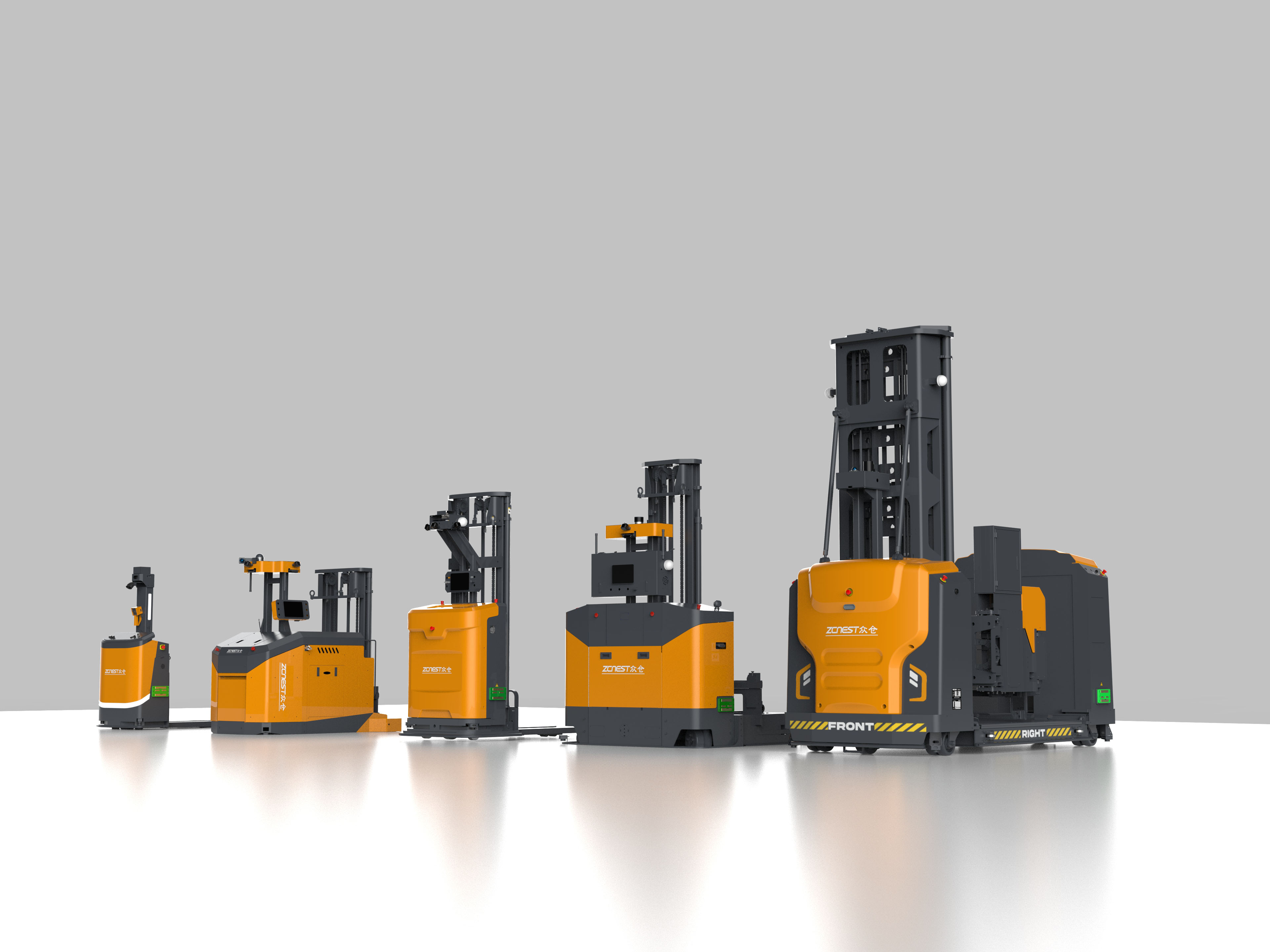
When ordering a custom autonomous forklift from China, many buyers assume that the standard safety scanner or sensor supplied by the manufacturer is the only available option. In practice, buyers can often request specific safety component brands, including products from European or U.S. manufacturers. However, the real issue is not simply whether the factory can install a different scanner.
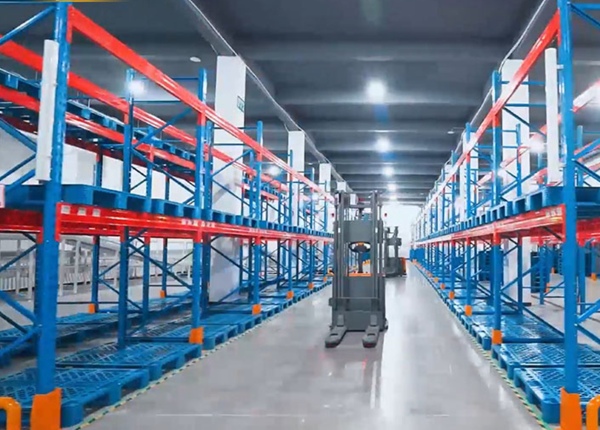
The selected safety scanner must be compatible with the forklift's safety controller, wiring architecture, communication interface, mounting position, protective fields, response time, and validation process. Changing one safety component can therefore affect engineering cost, commissioning time, documentation, and the responsibilities of both the Chinese manufacturer and the local integrator.
Key procurement point: If your company requires a specific Western safety scanner brand, do not simply write the brand name into the purchase order. Specify the exact model, required safety function, interface, certification requirements, mounting conditions, and FAT/SAT acceptance criteria.
In many custom automation projects, the buyer can request a specific safety scanner or safety laser brand. A Chinese automated forklift manufacturer may be able to purchase and integrate components from established European, American, or Japanese suppliers.
However, brand selection and engineering compatibility are two different questions. A scanner cannot be treated as an independent plug-and-play component simply because it uses a familiar industrial connector.
The manufacturer should verify at least the following:
Safety scanner model and exact product variant
Safety output architecture and communication interface
Compatibility with the AGV safety PLC or safety controller
Operating voltage and electrical interface
Protective field and warning field configuration
Scanner mounting height and detection geometry
Required response time and stopping distance
Environmental conditions such as dust, temperature and reflective surfaces
Required safety validation and documentation
For this reason, the best RFQ wording is not simply “use a SICK safety scanner” or “use a U.S.-made laser.” It should identify the exact component and define how the component is expected to function within the complete forklift safety system.
Potentially, yes. Chinese AGV and autonomous forklift manufacturers may support customer-specified safety components when those components are technically available and compatible with the vehicle architecture.
The important question is whether the manufacturer has previously integrated the requested component into the same or a similar vehicle platform. If the scanner has already been validated on that platform, the engineering risk may be lower. If it is a completely new component, additional electrical integration, software configuration, safety-field setup, testing, and documentation may be required.
Do not judge integration risk by brand reputation alone. A premium scanner can still require significant engineering work if its safety outputs, controller interface, mounting geometry, or protective-field configuration differ from the manufacturer's standard component.
Before approving the purchase order, ask the manufacturer to confirm:
Whether the exact scanner model can be physically and electrically installed.
Whether the scanner can be integrated into the vehicle's safety control architecture.
Whether the complete safety function will be tested and documented after the modification.
This distinction is important because installing a scanner is a hardware task, while proving that the complete safety function works correctly is a system-engineering task.
There is no universal percentage that applies to every Chinese autonomous forklift. The price increase depends on the exact sensor, quantity, availability, engineering work, software configuration, safety controller changes, testing requirements, and whether the manufacturer already has an established integration package.
The additional cost can come from several different sources:
| Cost Item | Why It May Increase |
|---|---|
| Safety scanner hardware | Different unit purchase price compared with the standard component |
| Mounting hardware | Custom brackets or mechanical protection may be required |
| Electrical integration | Different wiring, connectors, voltage or safety I/O architecture |
| Software configuration | Protective fields, warning fields and scanner parameters may need configuration |
| Safety engineering | Additional validation and functional testing may be necessary |
| Documentation | Updated electrical drawings, component lists and safety documentation |
For a procurement comparison, ask the supplier to provide the price difference as a line-item quotation rather than simply giving a higher total forklift price. This allows you to distinguish the genuine hardware premium from engineering and integration charges.
Better RFQ structure: Request two configurations: the manufacturer's standard safety package and the buyer-specified Western safety package. Ask for the hardware difference, engineering fee, testing fee, lead-time impact, and any warranty limitations separately.
Not necessarily. Replacing a component does not automatically mean that every machinery compliance document becomes invalid. The actual effect depends on what certification or declaration applies to the machine, what the original assessment covered, which component was changed, and whether the modified system still satisfies the applicable requirements.
A safety scanner is part of the overall protective system. If its replacement changes the safety function, response time, protective distance, control architecture, or other safety characteristics, the modified machine may require additional assessment or validation.
This is why buyers should not accept a simple statement such as “the CE certificate remains valid” without asking what exactly was assessed and what documentation will be updated after the customization.
For a customized autonomous forklift, the buyer should consider requesting updated versions of relevant documents, such as:
Electrical schematics
Safety component list
Scanner model and configuration information
Safety circuit documentation
Risk assessment or relevant safety documentation
Factory acceptance test records
Safety function test results
Updated operating and maintenance instructions where applicable
The key issue is traceability. The documentation supplied with the exported forklift should describe the actual machine delivered to the customer, not the original standard configuration before customization.
This can be possible if the Chinese manufacturer agrees to use customer-supplied components. This approach can be useful when the buyer has an established relationship with a local distributor and wants to ensure that the exact scanner model is used.
However, the logistics process should be agreed before the purchase order is finalized. The factory needs to know exactly what will arrive, when it will arrive, who owns the components, and what happens if a component is damaged or found incompatible during assembly.
| Question | What the Buyer Should Confirm |
|---|---|
| Who purchases the scanner? | Buyer, local distributor or Chinese manufacturer |
| Who ships it to China? | Distributor, buyer or freight forwarder |
| Who pays import costs? | Clarify customs, duties, taxes and local handling |
| Who owns the component? | Define ownership before installation |
| What if it is incompatible? | Define responsibility for replacement and engineering changes |
| What if it is damaged? | Define insurance and replacement responsibility |
Using a customer-supplied safety scanner can solve one procurement problem while creating another. The Chinese manufacturer may reasonably limit its warranty responsibility if a third-party component causes a system failure, especially when the component was not selected or purchased by the manufacturer.
Therefore, the contract should clearly distinguish between the scanner manufacturer's warranty, the AGV manufacturer's integration responsibility, and the customer's responsibility for supplying the component.
Important: Do not allow “customer-supplied component” to become a blanket exclusion from the AGV manufacturer's responsibility for the complete safety system. The contract should state which party is responsible for integration, configuration, validation and final functional testing.
If a specific Western safety scanner is important to your project, include the requirement before technical design begins. Changing the component after the forklift has already entered production can create additional engineering and schedule risk.
A practical RFQ can include the following:
Required safety scanner manufacturer and exact model
Required quantity per vehicle
Required safety function and protective field configuration
Required interface with the safety controller
Required mounting position and mechanical protection
Required certification or compliance documentation
Engineering and software integration cost
Additional testing and validation requirements
FAT acceptance criteria for the safety system
Warranty responsibility for the third-party component
Responsibility for replacement parts and future service
Lead-time impact caused by customer-specified components
For larger fleets, it is also worth specifying whether the same safety scanner model must be used across all vehicles. Standardizing the safety component can simplify spare-parts management, technician training, troubleshooting and future fleet expansion.
A procurement team should compare safety packages based on the complete engineering solution rather than the scanner brand alone. A lower-cost standard scanner may already be fully integrated into the vehicle's safety controller, while a premium third-party scanner may require additional engineering and validation.
Conversely, if your corporate engineering standard requires a specific safety scanner brand, accepting the factory's standard component simply because it is cheaper may create difficulties for global maintenance, spare-parts management or internal safety approval later.
For serious B2B procurement, the real question is not “Chinese or Western component?” The better question is: “Can the supplier integrate the specified safety component into the complete autonomous forklift, validate the resulting safety functions, provide matching documentation, and accept contractual responsibility for the delivered system?”
That approach gives the buyer a much clearer basis for comparing Chinese autonomous forklift suppliers and prevents a component-brand decision from becoming an unexpected engineering, certification, warranty or commissioning issue later in the project.
📖 AGV Forklift Guide — Essential manual for selection and safety.
⚙️ How AGV Systems Work — A deep dive into navigation and logic.
⚖️ AGV vs. AMR Comparison — Choosing the right technology for your facility.
💰 AGV Cost and ROI — Evaluating investment and payback periods.





 Chinese
 English