


AGV Operations and Stabilization Guide
AGV go-live is the start of routine operations, not the end of the project. During the first 30 days, the warehouse team should stabilize daily workflows, identify recurring interruptions, validate performance against acceptance criteria, and establish a clear process for maintenance, escalation, and continuous improvement.
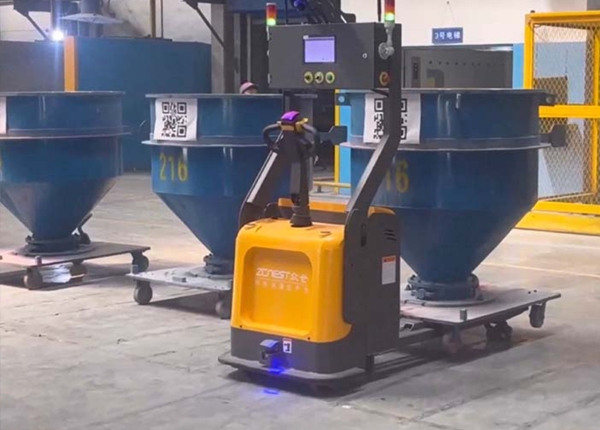
The first week should focus on safe, repeatable execution. Avoid making multiple nonessential changes at once. Establish how tasks are released, how operators respond to alarms, and how the team records abnormal events.
Confirm that vehicles, chargers, safety devices, and communication links are ready for the shift.
Check that pickup and delivery points remain accessible and correctly configured.
Record failed tasks, manual interventions, blocked routes, and unexpected waiting.
Verify that completed movements are reflected correctly in the warehouse system.
Review unresolved alarms before shift handover.
During this period, distinguish a one-time commissioning issue from a recurring operational problem. Each incident should include a time, location, task or vehicle reference, observed behavior, and recovery action.
WEEK 01
Focus on safe operation, task completion, basic handovers, alarm response, and unresolved commissioning issues. Ensure every shift follows the same operating procedure.
WEEK 02
Review cycle times, waiting periods, recurring failed pickups, congestion, and manual interventions. Separate vehicle faults from problems caused by upstream or downstream processes.
WEEK 03
Prioritize a small number of verified issues. Test changes individually, document the expected effect, and compare results with the baseline before keeping the change.
WEEK 04
Confirm maintenance responsibilities, escalation paths, performance reporting, operator training, and ownership of outstanding improvement actions.
Once the system has accumulated operating data, compare actual results with the agreed acceptance criteria and planned workload. Look beyond total task counts to understand where time is being lost.
Completed tasks: Actual completed moves compared with planned demand.
Task cycle time: Time from task release to confirmed completion, with a consistent definition.
Waiting time: Time spent waiting for pallets, stations, routes, or upstream system responses.
Failed tasks: Frequency and causes of unsuccessful pickups, placements, or transfers.
Manual interventions: Events that require an operator to restore normal execution.
Vehicle availability: Time vehicles are available for assigned work, using an agreed calculation method.
Use consistent definitions across shifts. For example, a task that is dispatched but not completed should not be counted as a completed pallet move. Document planned breaks, maintenance windows, and unusual demand when comparing performance.
After identifying the most frequent or costly interruptions, prioritize corrective actions according to operational impact, safety, and implementation effort. Examples include changing a poorly positioned handover point, improving pallet presentation, adjusting task release rules, or clarifying how operators recover a failed movement.
Avoid changing vehicle routes, task priorities, station logic, and system interfaces simultaneously. Multiple changes make it difficult to determine which adjustment produced the result and can introduce new problems.
Problem observed and evidence collected.
Likely cause and responsible owner.
Proposed change and expected outcome.
Test period and comparison metric.
Decision to retain, revise, or reverse the change.
By the fourth week, the site should have a practical operating model that does not depend entirely on the original project team. Operators, warehouse supervisors, maintenance staff, IT personnel, and the AGV supplier should understand their respective responsibilities.
Document standard operating procedures and shift handover requirements.
Define first-line checks and escalation criteria for recurring alarms.
Confirm preventive maintenance and charging responsibilities.
Review spare-parts arrangements, remote support, and response expectations.
Close or assign every outstanding issue with a responsible owner and target date.
Compare actual performance with the original acceptance criteria and record any remaining gaps.
The review should produce a documented performance baseline, a list of recurring issues and their causes, completed corrective actions, a maintenance and escalation plan, and a prioritized improvement backlog. If acceptance criteria remain unmet, record the evidence and agree on a corrective plan with the responsible supplier or project team.
📖 AGV Forklift Guide — Essential manual for selection and safety.
⚙️ How AGV Systems Work — A deep dive into navigation and logic.
⚖️ AGV vs. AMR Comparison — Choosing the right technology for your facility.
💰 AGV Cost and ROI — Evaluating investment and payback periods.












 Chinese
 English





