


Cold Storage Automation Guide
Selecting an AGV forklift for a cold storage warehouse requires more than checking payload and lifting height. Low temperatures, condensation, battery behavior, floor conditions, and the movement of pallets through temperature-controlled zones all affect equipment suitability. This guide explains the technical and operational details buyers should confirm before specifying an automated forklift for refrigerated or frozen storage.
Cold storage facilities do not all operate under the same conditions. A chilled food warehouse, a frozen goods distribution center, and a deep-freeze facility can impose very different requirements on an AGV forklift. The temperature inside the storage area is only one part of the assessment.
Before requesting a quotation, document the conditions under which the vehicle must operate. Include the minimum and maximum operating temperatures, the time spent in each temperature zone, the frequency of entering and leaving cold areas, and the expected number of operating hours per shift.
Temperature range: Specify the actual operating temperature rather than describing the environment only as a cold warehouse.
Transition frequency: Record how often the AGV moves between cold storage and warmer staging areas.
Humidity and condensation: Identify locations where moisture may form on sensors, electrical components, or structural surfaces.
Floor conditions: Check for ice, condensation, uneven surfaces, floor joints, and changes in traction.
Workload: Estimate pallet movements per hour, peak demand, payload range, and lifting frequency.
These details help determine whether a standard warehouse vehicle can be adapted or whether a dedicated low-temperature configuration is required. Do not assume that a vehicle suitable for a chilled area is automatically suitable for a freezer environment.
AREA 01
Low temperatures can reduce battery performance and affect charging conditions. Confirm the battery manufacturer's permitted operating and charging temperatures, the expected runtime under the planned workload, and whether battery heating or a temperature-controlled charging area is required.
AREA 02
Condensation, frost, reflective surfaces, and changes in the environment can affect sensing and localization. Ask the supplier how sensors are protected, how contamination is detected, and what operating conditions have been validated for the proposed navigation system.
AREA 03
Lubricants, seals, cables, connectors, and moving components must be suitable for the specified temperature range. Request the manufacturer's environmental limits and maintenance recommendations for the exact configuration being quoted.
AREA 04
Repeated temperature transitions may cause condensation. Confirm protection for electrical systems and define inspection and recovery procedures following abnormal moisture exposure, sensor faults, or charging interruptions.
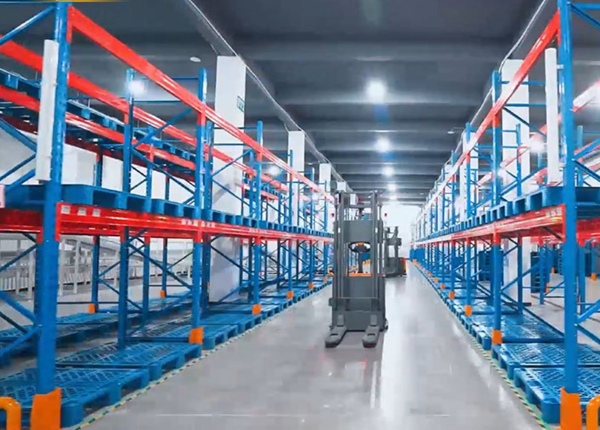
Cold storage construction and operating layouts vary widely. Some facilities use block stacking and floor-level pallet movement, while others rely on selective racking, narrow aisles, or high-bay storage. The appropriate AGV type depends on the pallet handling process, storage density, lift height, and aisle geometry.
Minimum clear aisle width and the space available for vehicle movement.
Maximum lifting height and required load capacity at that height.
Pallet dimensions, fork entry direction, bottom-board design, and load overhang.
Transfer-station height and the interface with conveyors or other handling equipment.
Floor load limits, gradients, joints, and any areas where traction may be reduced.
For high-bay applications, request load-capacity information at the intended lifting height and load center. A vehicle's maximum rated capacity at a low height should not be treated as its allowable capacity at the highest rack level.
A vehicle's published travel speed does not establish how many pallets it can process per shift. Actual throughput depends on the complete handling cycle and on how efficiently the surrounding warehouse processes support the vehicle.
Break the cycle into travel, positioning, pickup, lifting, placement, task confirmation, and return travel. Include waiting time at doors, staging stations, and transfer points. Where the warehouse has several temperature zones, assess how transitions affect task time and charging arrangements.
What operating runtime is expected under the specified temperature and workload?
How are charging and battery temperature managed during the shift?
Can the vehicle complete the required peak pallet volume with planned charging and maintenance?
What happens when a door, transfer station, or target storage location is unavailable?
Which operating conditions must be reproduced during acceptance testing?
Cold storage operations often combine automated vehicles, employees, manual forklifts, doors, conveyors, and staging equipment. The traffic plan must account for restricted visibility, slippery areas, emergency access, and the interaction between automated and manual operations.
The AGV control system should also exchange the required task and status information with the warehouse management system. Define how pallet identities, destination locations, completed movements, and failed tasks are recorded. Establish what happens when communication is interrupted or the inventory record does not match the physical pallet.
Confirm which checks can be performed by local personnel and which require specialist support. Request maintenance instructions, recommended spare parts, diagnostic procedures, and clear escalation channels. For remote sites, agree on how operating logs and fault information will be shared when troubleshooting is needed.
Provide the temperature range, transition frequency, warehouse layout, aisle width, rack height, pallet dimensions, maximum load, required throughput, charging arrangements, and WMS requirements. Ask the supplier to identify the environmental limits of the proposed configuration and define the operating conditions that will be verified during testing.
📖 AGV Forklift Guide — Essential manual for selection and safety.
⚙️ How AGV Systems Work — A deep dive into navigation and logic.
⚖️ AGV vs. AMR Comparison — Choosing the right technology for your facility.
💰 AGV Cost and ROI — Evaluating investment and payback periods.





 Chinese
 English