


AGV Project Readiness Guide
Warehouse preparation has a direct impact on AGV forklift selection, integration, commissioning, and acceptance. Before equipment is manufactured or delivered, buyers should confirm the physical layout, pallet specifications, operating workflow, information-system requirements, and site responsibilities. This guide provides a practical checklist for preparing a warehouse automation project.
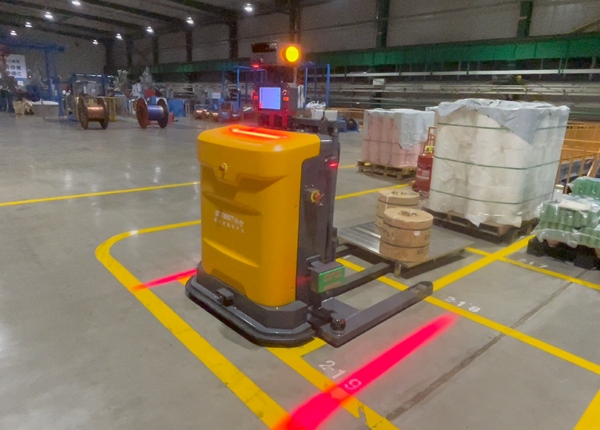
A warehouse drawing is one of the most important inputs for AGV forklift planning, but it must reflect actual operating conditions. Changes made after the drawing was created, temporary storage areas, rack projections, and equipment installed along travel routes can all affect vehicle movement.
Prepare the latest available layout and identify the areas included in the automation scope. Mark receiving points, storage locations, outbound staging, charging areas, transfer stations, restricted zones, and the routes between them.
Provide CAD or other suitable layout files with dimensions and a clear coordinate reference.
Confirm rack positions, aisle widths, rack heights, columns, doors, and fixed obstructions.
Mark pickup and drop-off locations and specify the expected pallet orientation.
Identify pedestrian routes, manual forklift traffic, emergency exits, and restricted areas.
Record floor joints, gradients, surface changes, and areas requiring further inspection.
Where the drawings may be outdated, verify critical dimensions on site. Vehicle selection and route design should be based on the usable space, not only the nominal dimensions shown in a drawing.
AREA 01
Verify aisle clearance, floor condition, ramps, doorways, rack geometry, charging locations, and the operating space at each handover point.
AREA 02
Document pallet dimensions, weight range, load center, fork entry direction, overhang, and any variation that may affect pickup or placement.
AREA 03
Map the movement from origin to destination, identify peak periods, and define how tasks are released, prioritized, completed, and recovered after failure.
AREA 04
Confirm the required WMS or WCS interfaces, network access, IT approvals, commissioning access, and responsibilities for testing and acceptance.
AGV forklift selection depends on the loads the vehicle must handle, not simply the average pallet in the warehouse. A small number of heavier, taller, or unusually shaped loads can determine the required vehicle configuration.
Minimum, typical, and maximum pallet dimensions.
Minimum, typical, and maximum loaded pallet weight.
Load height, center of gravity considerations, and overhang.
Pallet material, bottom-board design, and fork entry requirements.
Required pickup and placement heights and the destination rack configuration.
Photographs of representative pallets and difficult loads can help the supplier understand the handling conditions. If pallet quality varies significantly, identify that variation early rather than treating every pallet as identical.
Before installation, describe how a transport task begins, who assigns the destination, and how the warehouse knows that the movement has been completed. The process may involve a WMS, fleet control system, conveyor, operator, or another handling device.
Create a simple workflow for normal operations and a separate process for exceptions. Examples include an occupied destination, a missing pallet, an unavailable pickup point, a blocked route, or a communication interruption.
Which system creates and prioritizes each transport task?
How are pallet IDs and destination locations exchanged?
How is task completion confirmed and recorded?
Who responds when an AGV cannot complete a task?
How are manual interventions reconciled with warehouse inventory records?
The project team should confirm the network and IT arrangements required by the proposed system. This may include wireless coverage, network access, firewall rules, device permissions, logging, and approved remote support methods. Test the actual operating routes and transfer areas rather than relying only on coverage estimates.
Review safety arrangements for pedestrian crossings, manual vehicles, staging zones, and emergency access. Establish the site process for isolating equipment, responding to alarms, and recovering failed tasks. Final arrangements should reflect the vehicle's design, site risk assessment, and applicable requirements.
Also confirm practical commissioning arrangements, including delivery access, unloading equipment, installation space, power availability, test pallets, representative loads, and access to the customer's IT and warehouse personnel.
Acceptance criteria should be agreed before commissioning starts. They should describe measurable results under defined conditions rather than relying on broad statements such as smooth operation or high efficiency.
Successful pickup and placement using representative pallets.
Required travel and handling performance under the agreed workload.
Correct task status exchange with connected warehouse systems.
Defined responses to selected faults and blocked locations.
Verification of safety functions and operating procedures.
Completion of training, documentation, and outstanding issue records.
Specify the test conditions, measurement method, and responsibility for resolving failed items. This gives both the customer and supplier a clear basis for determining whether the system is ready for routine operation.
Before finalizing the installation schedule, confirm that the latest layout is available, critical dimensions have been verified, pallet data has been collected, workflows are documented, software responsibilities are assigned, network access is approved, safety arrangements are defined, and acceptance criteria are agreed. Any unresolved item should have a named owner and a target completion date.
📖 AGV Forklift Guide — Essential manual for selection and safety.
⚙️ How AGV Systems Work — A deep dive into navigation and logic.
⚖️ AGV vs. AMR Comparison — Choosing the right technology for your facility.
💰 AGV Cost and ROI — Evaluating investment and payback periods.












 Chinese
 English





