


AGV PROJECT ACCEPTANCE GUIDE
Before accepting an AGV forklift project, verify that the system can handle the agreed loads, complete warehouse transport tasks, communicate with required software, and recover from defined exceptions under real operating conditions.
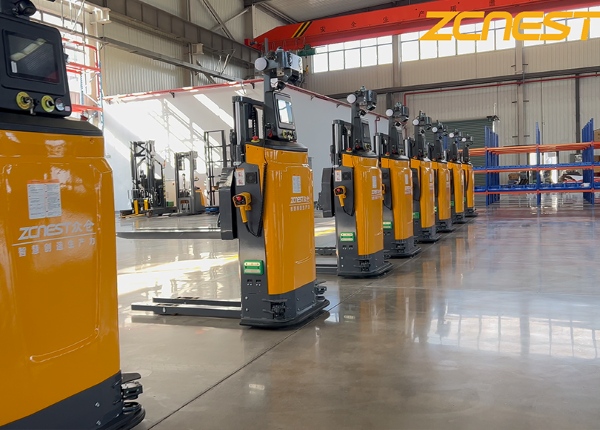
AGV project acceptance should be based on agreed, measurable requirements rather than a general demonstration that the vehicle can move autonomously. A forklift may complete a short test route successfully but still fail to meet the warehouse's throughput, handling, integration, or availability requirements.
Before commissioning, document the tasks the system must perform, the permitted load range, pickup and drop-off locations, operating schedule, software interfaces, and expected results. Each requirement should have a corresponding test method and a clear pass or fail condition.
Distinguish between factory acceptance testing, site acceptance testing, and operational performance evaluation. Factory testing can verify equipment functions in a controlled environment, while site testing must confirm compatibility with the actual warehouse layout and operating processes.
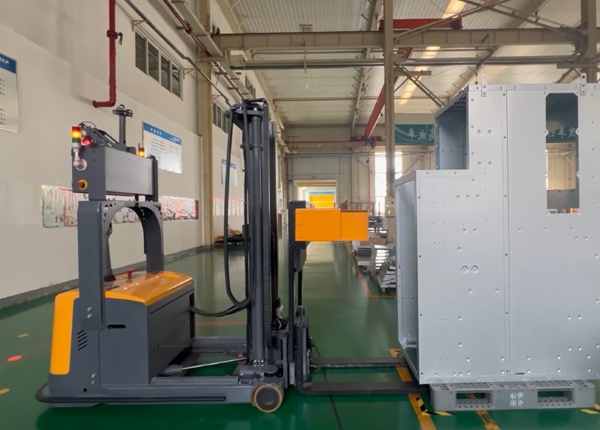
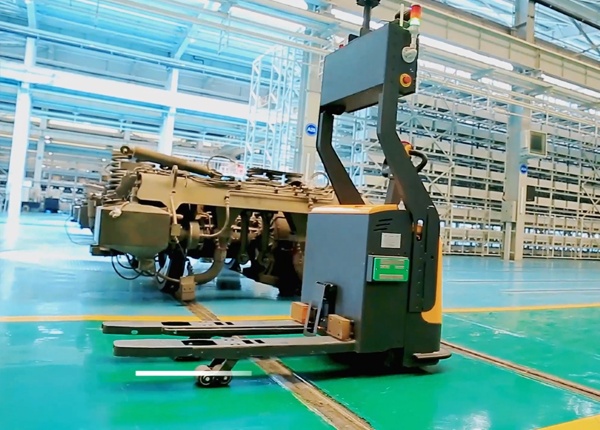
Begin with the physical handling tasks that the vehicle is expected to perform. Confirm that the AGV can approach pallets, enter the fork openings, lift the specified loads, travel along the approved routes, and place the pallets at the designated positions.
Check the approved pallet dimensions and load weights.
Test the required lifting heights and load configurations.
Verify pickup and placement at representative locations.
Check load stability during starting, stopping, and turning.
Inspect pallets and goods for handling damage.
Record failed pickups, inaccurate placements, and manual interventions.
Tests should include representative variations within the agreed operating range. If the project requires multiple pallet types or several storage levels, test each relevant category rather than assuming that one successful demonstration proves universal compatibility.
Throughput should be measured using a defined set of tasks and operating conditions. Record the number of completed movements, the observation period, route configuration, load characteristics, and any interruptions that affect the result.
Clarify what counts as a completed task. For example, a pallet movement may only be complete when the load has been placed at the correct destination and the warehouse system has received the required completion status.
Measure more than the fastest individual cycle. Review average cycle time, waiting time, task completion rate, and performance during representative peak periods. If the warehouse has shared aisles or multiple AGVs, include the traffic conditions that are expected during routine operation.
The acceptance target should reflect the contract or approved project specification. Do not introduce an arbitrary throughput target after testing has started.
Navigation testing should cover the intended routes and the environmental conditions the supplier has agreed to support. These may include aisle transitions, intersections, pickup stations, rack locations, doorways, and transfer points.
Check whether the vehicle reaches the required positions consistently and whether it responds correctly when a route becomes unavailable. Temporary obstacles, blocked aisles, and inaccessible destinations should be tested according to the agreed operating and safety procedures.
Record navigation-related stops, recovery time, operator intervention, and any effect on task completion. A vehicle that performs well in an empty warehouse may behave differently when people, manual forklifts, and temporary storage are present.
TEST 01 — LOAD HANDLING
Verify pallet compatibility, lifting performance, positioning, and load stability.
TEST 02 — OPERATIONAL THROUGHPUT
Measure completed tasks, cycle time, waiting time, and performance under agreed traffic conditions.
TEST 03 — SYSTEM INTEGRATION
Confirm task creation, dispatch, status updates, completion records, and exception handling.
TEST 04 — SAFETY AND RECOVERY
Verify approved safety functions, fault responses, recovery procedures, and operator responsibilities.
Each test should have a documented procedure, expected result, actual result, evidence, and sign-off status. Record any failed test as an issue requiring resolution or formally agreed disposition.
For integrated warehouse projects, acceptance testing must cover the complete task flow between business systems and the AGV fleet-control system. A vehicle completing a physical movement is not sufficient if inventory records or task status remain incorrect.
Test representative workflows from task creation through assignment, execution, and completion reporting. Confirm how the system handles invalid destinations, unavailable vehicles, canceled tasks, duplicate requests, and communication interruptions.
Verify required data fields and message formats.
Confirm task acknowledgments and completion status.
Check that failed tasks can be identified and investigated.
Verify that duplicate requests do not cause unintended repeated movements.
Test the agreed recovery procedure after communication interruptions.
Confirm that operational records can be reviewed after testing.
Integration responsibilities should be agreed among the warehouse owner, AGV supplier, and software provider. Document which party resolves issues in the vehicle, fleet-control system, warehouse software, and network environment.
Safety acceptance should follow the applicable requirements, risk assessment, approved design, and supplier documentation. Testing must be performed by authorized personnel using controlled procedures, not by deliberately creating uncontrolled hazardous situations.
Verify the required emergency-stop functions, protective sensing, warning devices, restricted operating zones, and responses to defined fault conditions. Confirm how the vehicle behaves when it detects an obstacle or encounters a fault, and how the system prevents unsafe automatic restart where required.
Document who is authorized to reset faults, move a disabled vehicle, clear a blocked route, and return the system to operation. These responsibilities should be included in operator training and site procedures.
Acceptance should conclude with a documented review of test results, outstanding defects, corrective actions, and operating limitations. Not every project issue has the same impact, so each item should have an assigned owner, target date, and agreed resolution path.
Compile the acceptance test results and supporting records.
List defects, deviations, and unresolved interface issues.
Confirm delivery of operating and maintenance documentation.
Verify completion of required operator and maintenance training.
Confirm spare-parts, service, and support arrangements.
Record final acceptance or conditional acceptance according to the contract.
The handover package should give the warehouse team enough information to operate the system, identify faults, contact the correct support channel, and understand the agreed boundaries of system performance.
Share your warehouse workflow, equipment specifications, required throughput, software interfaces, and commissioning scope. ZCNest can help identify the key technical requirements to review when planning AGV forklift testing and handover.
📖 AGV Forklift Guide — Essential manual for selection and safety.
⚙️ How AGV Systems Work — A deep dive into navigation and logic.
⚖️ AGV vs. AMR Comparison — Choosing the right technology for your facility.
💰 AGV Cost and ROI — Evaluating investment and payback periods.





 Chinese
 English