


AGV PROCUREMENT
A lower purchase price does not always mean a lower project cost. Use a structured comparison to evaluate technical fit, included scope, software interfaces, acceptance criteria, and after-sales responsibilities.
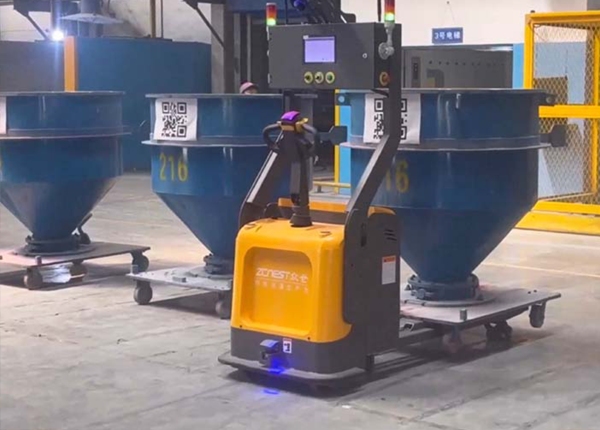
AGV forklift quotations can look comparable while describing different solutions. One supplier may include site testing and software interfaces; another may quote only the vehicle and basic commissioning. A third may assume standardized pallets, unrestricted routes, or changes to the warehouse layout.
Procurement teams need a common evaluation basis. The goal is not simply to identify the lowest number, but to establish which proposal best meets the operating requirement with clear scope, measurable performance, and manageable implementation risk.
Before scoring suppliers, create one requirement sheet and ask every bidder to respond to the same version. Include the intended tasks, load specifications, travel routes, rack interfaces, shift patterns, and expected peak demand.
Separate mandatory requirements from preferences. For example, a maximum load weight, required lift height, or specific aisle clearance may be mandatory. A preferred user interface or optional reporting feature may be scored as a benefit rather than treated as a pass-or-fail condition.
Ask suppliers to state compliance explicitly and identify exceptions. A blank field should not be interpreted as confirmation that the requirement is met.
Vehicle specifications matter, but they need to be evaluated in the context of the warehouse. A truck's rated capacity does not by itself confirm suitability for a particular load at the required lift height or under a specific operating condition.
Load handling: Confirm rated load, load center, pallet entry, and required lifting height.
Warehouse geometry: Check aisle width, turning or alignment requirements, rack clearances, and handover positions.
Navigation: Confirm suitability for the actual environment and the required localization and obstacle-handling behavior.
Operating capacity: Request a throughput estimate based on the agreed route distances, task pattern, and peak periods.
Safety: Review the proposed safeguards, risk assessment, operating rules, and relevant compliance documentation.
Where technical suitability depends on site conditions, require a survey or validation plan instead of accepting an unqualified statement of compatibility.
List all cost components separately. Depending on the project, these may include vehicles, fleet software, navigation setup, WMS/WCS interfaces, network or infrastructure work, site modifications, training, commissioning, testing, travel, shipping, and local support.
Ask suppliers to distinguish one-time costs from recurring fees. Identify optional items, exclusions, estimated quantities, and conditions that could trigger additional charges. If a line item is not applicable, request that it be marked as excluded or not required rather than left ambiguous.
| Cost Category | Questions to Ask |
|---|---|
| Equipment | Which models, attachments, batteries, and accessories are included? |
| Software | Are fleet control, licenses, updates, and interfaces included? |
| Implementation | Who handles mapping, commissioning, testing, and training? |
| Site work | Are markings, network coverage, charging areas, and modifications included? |
| Support | What warranty, response arrangements, and spare-parts terms apply? |
A technically capable truck can still be a poor fit if task ownership and interface responsibilities are unclear. Ask which system creates tasks, which system assigns vehicles, how completion is confirmed, and how errors are reported.
Request an interface scope that identifies data exchanged, communication method, testing responsibilities, and the party responsible for changes to existing warehouse software. Confirm whether interface development is included in the quoted price and how changes to the customer's system will be handled.
Terms such as “high efficiency,” “stable operation,” and “easy integration” are not sufficient acceptance criteria. Define the operating scenarios and the evidence required to demonstrate that the solution works as intended.
Representative routes, loads, and pickup/drop-off points.
How successful pickup, transport, and placement will be verified.
How task completion, interruptions, and recovery will be recorded.
Required safety checks and operating conditions for testing.
Responsibility for defects, retesting, and final sign-off.
Any throughput target should specify the test conditions, task mix, distance, and measurement method. Without a shared test definition, results from different suppliers may not be directly comparable.
Once mandatory requirements have been checked, use a weighted scorecard to compare the remaining proposals. Adjust the weights to reflect business priorities and the risks of the specific warehouse.
Technical and warehouse fit — 25%
Total quoted project scope and cost — 20%
Throughput evidence and test method — 15%
Software and interface responsibilities — 15%
Implementation plan and schedule — 10%
Warranty, support, and spare parts — 10%
Documentation and training — 5%
Score each category using documented evidence. A supplier's unsupported claim should not receive the same score as a verified specification, a detailed implementation plan, or a test result under comparable conditions.
Before selecting a supplier, resolve differences in scope, list all exclusions, agree on acceptance criteria, and identify who owns each interface and site dependency. A transparent proposal is easier to budget, implement, and manage than a superficially cheaper but incomplete quote.
ZCNest supports AGV forklift selection and warehouse automation planning based on actual loads, routes, rack conditions, and system requirements. Share your project scope to discuss a technically aligned proposal and clarify the information needed for quotation.
📖 AGV Forklift Guide — Essential manual for selection and safety.
⚙️ How AGV Systems Work — A deep dive into navigation and logic.
⚖️ AGV vs. AMR Comparison — Choosing the right technology for your facility.
💰 AGV Cost and ROI — Evaluating investment and payback periods.












 Chinese
 English





