


WAREHOUSE OPERATIONS
Charging arrangements affect vehicle availability, travel distance, traffic flow, and daily warehouse operations. Plan charging locations around real task demand, site conditions, and safe access rather than simply choosing an unused corner.
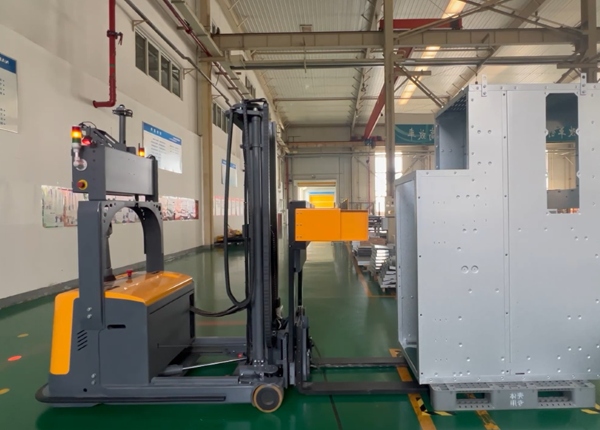
Charging station placement is an operational design decision, not just an electrical installation task. A poorly located station can add unnecessary travel, create congestion near a narrow aisle, interfere with manual forklift routes, or leave vehicles unavailable when demand peaks.
The best arrangement depends on fleet size, battery and charging technology, shift pattern, travel routes, and the physical constraints of the warehouse. These factors should be evaluated together before charging points are installed.
Map the periods when AGV forklifts are expected to work, pause, and recharge. A warehouse operating one shift with predictable breaks has different charging needs from a facility running several shifts with continuous transport demand.
Collect the following information:
Operating hours and shift change times.
Expected task volume by hour, including peak periods.
Planned breaks, cleaning windows, and maintenance periods.
Vehicle utilization patterns and expected charging opportunities.
Battery and charger requirements confirmed for the selected model.
Do not estimate charging demand from the number of vehicles alone. Two fleets of the same size may need different charging arrangements if their routes, task loads, operating hours, or utilization rates differ.
Mark possible charging areas on the warehouse layout and compare their position relative to high-frequency pickup and drop-off points. A station near a natural idle point may reduce unnecessary travel, but it should not obstruct a main aisle or create a bottleneck around a busy handover zone.
For each candidate, consider the distance from typical work areas, access during peak traffic, available floor space, and whether vehicles can enter and leave without blocking other movements. If a station is located near a rack end or intersection, verify that parked vehicles will not reduce visibility or usable clearance.
Where the warehouse has distinct operating zones, compare a centralized charging area with distributed charging points. A centralized arrangement may simplify supervision and maintenance, while distributed points may reduce travel in a large facility. Neither option is automatically better; the decision should be supported by route and utilization analysis.
Confirm the selected vehicle's charging method and the charger's installation requirements with the equipment supplier and the site's qualified electrical team. Do not assume that a general-purpose power outlet or an existing battery room is suitable.
Available electrical supply, circuit capacity, and protection requirements.
Charger dimensions, cable routing, and maintenance access.
Required ventilation, environmental conditions, and manufacturer instructions.
Floor condition, mounting requirements, and protection from vehicle impact.
Emergency access and separation from incompatible storage or activities.
Any electrical work, fire protection, and battery-related arrangements should follow applicable local codes and the selected equipment manufacturer's requirements. Have qualified personnel approve the installation before operation.
Charging points often lose their intended function when nearby floor space is used for temporary pallets, packaging, or maintenance supplies. Establish a marked operating boundary and define who is responsible for keeping it clear.
Include charging locations in the warehouse's housekeeping and inspection routines. If a charging point becomes unavailable, the fleet control process should have a defined response rather than repeatedly sending vehicles to an obstructed position.
Where people and manual forklifts share the area, assess vehicle approach paths, pedestrian access, visibility, and the consequences of a vehicle stopping unexpectedly. Physical barriers, floor markings, and access controls should be selected based on the site's risk assessment.
Charging behavior should be coordinated with fleet dispatch. Agree on the conditions under which a vehicle can finish its current task, return to charge, wait for a charging point, or be reassigned to a different task.
Discuss how the system handles several vehicles requesting charge at the same time. Confirm whether charging points are assigned automatically, whether a vehicle can wait safely, and how the system prevents a queue from blocking active transport routes.
Also define what happens when a charger is unavailable or a vehicle does not complete charging as expected. The procedure should identify the alarm, the person responsible for intervention, and the process for returning the vehicle to service.
Review the layout under realistic operating conditions. Consider the simultaneous movement of AGV forklifts, manual forklifts, pedestrians, and replenishment traffic. Test whether a vehicle can enter and leave the charging position without blocking a critical route.
During commissioning, observe actual charging behavior and fleet availability. Record charging requests, waiting time, travel to charging points, and any congestion around the station. Use those observations to adjust dispatch rules or the physical arrangement where necessary.
ROUTE FIT — Charging points are accessible without creating avoidable detours.
ELECTRICAL — Supply and installation meet approved requirements.
SAFETY — Access, visibility, and emergency routes are maintained.
DISPATCH — Charging requests and queues have defined rules.
OPERATIONS — Charging points remain available and clear during peak shifts.
Do not finalize charging station locations before reviewing routes, operating hours, electrical conditions, and fleet behavior. A well-planned charging layout should support vehicle availability without competing with storage space or material flow.
ZCNest can help review AGV forklift operating patterns, vehicle movement routes, and charging-related requirements during warehouse automation planning. Provide your layout and shift information to discuss a charging arrangement suited to the proposed operation.
📖 AGV Forklift Guide — Essential manual for selection and safety.
⚙️ How AGV Systems Work — A deep dive into navigation and logic.
⚖️ AGV vs. AMR Comparison — Choosing the right technology for your facility.
💰 AGV Cost and ROI — Evaluating investment and payback periods.














 Chinese
 English





