


WAREHOUSE AUTOMATION DESIGN
Unclear responsibilities can delay anAGV forkliftproject even when the equipment is technically suitable. Define the work, interfaces, deliverables, dependencies, and approval process before implementation begins.
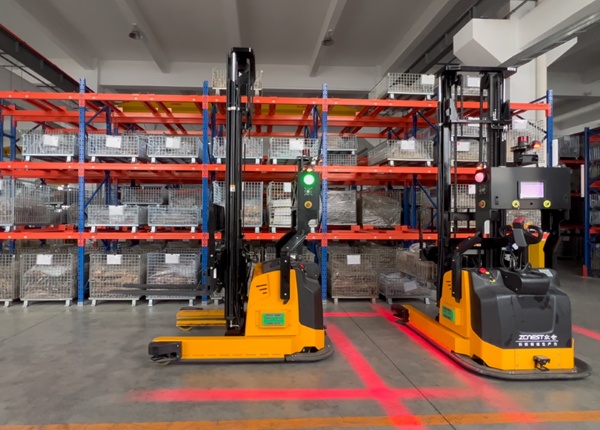
An AGV forklift project involves more than supplying vehicles. Warehouse operations, equipment engineering, software, IT, facilities, safety, and procurement may all have tasks that affect the final result. If their responsibilities are not defined early, a seemingly minor dependency can hold up commissioning or create unexpected costs.
A project scope document should describe what will be delivered, what the customer must provide, how both parties will work together, and how completion will be verified. It should be detailed enough to manage changes without making reasonable adjustments impossible.
Start by documenting the warehouse processes included in the project. Identify which material movements will be automated, which remain manual, and where responsibility transfers between people, vehicles, racks, conveyors, or other equipment.
Specify the operating area, expected load types, pickup and drop-off points, working schedule, and the intended production or warehouse operating conditions. List any phases that are explicitly excluded from the initial deployment.
A clear scope prevents a limited pilot from gradually becoming an undefined request to automate every warehouse process. It also creates a baseline for future expansion without forcing all later requirements into the first phase.
For every major work item, identify who is responsible for execution, who approves the result, and who must provide supporting information. The division of work depends on the contract and project architecture, so it should be agreed rather than assumed.
Equipment: Vehicle configuration, accessories, and required technical documentation.
Site preparation: Layout accuracy, access clearance, floor repairs, and approved infrastructure work.
Software: Fleet configuration, task logic, interface development, and test support.
Customer systems: WMS access, interface specifications, test data, and authorized IT resources.
Operations: Pallets, test loads, operating procedures, training participants, and production windows.
Safety: Site risk assessment, operating rules, approvals, and emergency procedures.
For each item, specify the required format and due date. “Customer to provide layout” is less useful than “customer to provide an updated dimensioned layout showing racks, columns, doors, and approved handover points by the agreed design review date.”
Interface work is a common source of ambiguity. Identify which system creates transport requests, which system manages inventory, which system assigns vehicles, and which system records task completion. The answer will vary by installation, but the responsibility boundaries must be explicit.
For each interface, document the data exchanged, communication method, required access, error handling, test environment, and approval process. Clarify who changes an interface if the customer's existing system is modified during the project.
Also identify infrastructure dependencies such as network access, server resources, user permissions, and security approvals. If a dependency is outside the supplier's control, document its impact on the schedule and the process for resolving delays.
Project milestones should be linked to tangible outputs rather than general statements that work is progressing. The exact sequence will depend on the project, but typical checkpoints include requirements confirmation, design review, interface validation, site readiness, commissioning, acceptance testing, and handover.
| Milestone | Evidence to Review |
|---|---|
| Requirements confirmed | Approved task list, loads, routes, and operating assumptions. |
| Design reviewed | Layout, handover positions, interface plan, and identified risks. |
| Site ready | Completed site checklist and resolved critical access issues. |
| Testing completed | Test records, issue list, retest evidence, and sign-off status. |
| Handover completed | Training records, operating documents, and support contacts. |
Acceptance conditions should be agreed before equipment delivery or commissioning. Define the test scenarios, operating conditions, required records, treatment of failed tests, and process for signing off completed work.
Changes should be assessed for cost, schedule, safety, and technical impact before they are approved. Examples include adding new pallet types, changing rack positions, moving handover points, modifying task priorities, or expanding the operating area.
Keep a change log that records the request, reason, decision, responsible person, and any updated documents. This is particularly important when warehouse operations continue to evolve while implementation is underway.
Define what the operating team needs before the project is considered complete. Deliverables may include user training, routine inspection instructions, fault reporting steps, recovery procedures, system documentation, and escalation contacts.
Clarify the support channel, service hours, remote access arrangements, spare-parts process, and information the customer must provide when reporting a fault. Where local support or on-site service is required, document the agreed scope and availability instead of relying on a general promise of support.
DELIVERABLES — Every major output is described and assigned.
DEPENDENCIES — Customer inputs and site prerequisites have owners and due dates.
INTERFACES — System boundaries and testing responsibilities are documented.
ACCEPTANCE — Completion criteria and evidence are agreed in advance.
CHANGES — Scope changes follow a documented review and approval process.
A well-defined AGV forklift project scope connects equipment delivery to the customer's actual warehouse process. Clear responsibilities, measurable milestones, and agreed acceptance conditions reduce avoidable disputes and make progress easier to manage.
ZCNest supports warehouse automation projects involving AGV forklifts, fleet control, and application-specific requirements. Share your target processes and project constraints to clarify technical scope, implementation dependencies, and the information needed for a proposal.
📖 AGV Forklift Guide — Essential manual for selection and safety.
⚙️ How AGV Systems Work — A deep dive into navigation and logic.
⚖️ AGV vs. AMR Comparison — Choosing the right technology for your facility.
💰 AGV Cost and ROI — Evaluating investment and payback periods.












 Chinese
 English





