


WAREHOUSE PERFORMANCE ANALYSIS
Build a reliable operational baseline before automating pallet transport. Learn which warehouse metrics to record, how to measure manual handling performance, and how to use the data to evaluate an AGV forklift project.
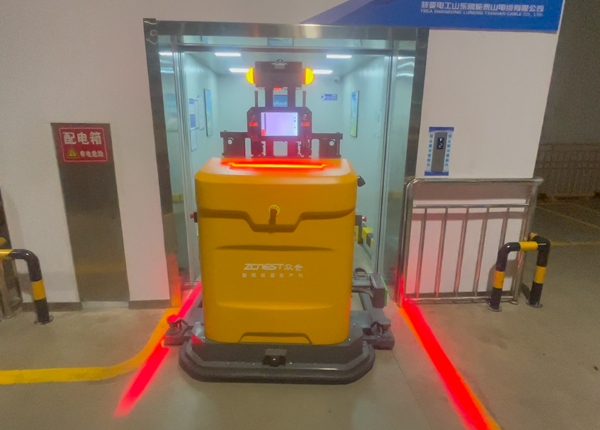
A warehouse considering AGV forklifts needs more than a daily shipment total to estimate the value of automation. The same number of pallet movements can require very different labor hours, travel distances, and equipment utilization depending on where the loads originate, how far they travel, and how often operators wait for the next task.
Measuring the current operation creates a baseline for comparing manual handling with a proposed automated workflow. It also helps identify whether the main constraint is transport capacity, poor task sequencing, waiting time, or an upstream process that frequently delays pallet movement.
Start by agreeing on a consistent unit of work. A movement might be defined as a completed transfer from one approved pickup point to one approved destination. If one task includes multiple pallets, record both the task count and the number of pallets handled.
Do not combine different activities into a single average without retaining their individual categories. Moving a pallet across a short staging area is not equivalent to retrieving a pallet from a high rack and delivering it to a dispatch zone.
Receiving transfers from unloading areas to inbound buffers.
Putaway movements from buffers to storage locations.
Replenishment transfers between reserve storage and picking areas.
Internal transfers between warehouse zones.
Retrieval and dispatch movements to outbound staging areas.
Define the start and end points of each activity. For example, a task may start when a forklift is assigned to a pallet and end when the load is placed at the destination and the location is released for the next task.
Cycle time is useful, but one average can conceal substantial variation. Record timestamps for task assignment, arrival at pickup, pickup completion, arrival at destination, and confirmed placement where the data is available.
These timestamps help distinguish productive travel from waiting, loading, unloading, and administrative delays. They also reveal whether congestion or inconsistent handover procedures are affecting performance.
Use representative operating periods. Include normal shifts, peak demand windows, shift changes, and periods when staging areas become crowded. Avoid drawing conclusions from a short observation period that does not represent regular warehouse activity.
Track the actual labor time assigned to pallet transport. Separate time spent driving from time spent waiting, searching for pallets, confirming destinations, handling exceptions, and completing other duties.
A simple starting point is to divide the total labor hours attributable to a defined movement category by the number of completed movements in that category. This provides an average labor-hour measure per movement.
Use the same activity boundaries when estimating the future automated process. AGV forklifts may reduce manual driving and some repetitive transport tasks, but employees may still need to prepare pallets, resolve exceptions, supervise operations, and maintain the equipment. Do not count every current forklift hour as automatically eliminated.
Empty travel occurs when a forklift moves without carrying a load. It may be necessary to reach the next pickup point, return to a working zone, or reposition for a different task. Record this travel separately where practical.
Also observe how often operators wait because a pallet is not ready, a destination is occupied, a rack location is unavailable, or another vehicle blocks the route. These delays may not be solved by adding more vehicles.
Classify the main causes of lost time. If a significant share of the delay comes from unavailable pallets or unclear staging rules, improve those processes before assuming that a larger AGV fleet will solve the problem.
Daily volume is not enough to size a transport system. A warehouse may handle a moderate total number of pallets but experience a short period when receiving, replenishment, and dispatch all compete for transport capacity.
Summarize completed movements by hour or another useful time interval. Compare the number of requested tasks with completed tasks and identify periods when work accumulates. Note the mix of short and long routes, loaded and empty travel, and any movements that require special handling.
This analysis provides a more useful basis for discussing vehicle quantity and task allocation with suppliers. The final fleet estimate should still be validated against route distances, vehicle specifications, charging requirements, traffic conditions, and the agreed operating scenario.
Use a consistent set of metrics to evaluate the current process and the proposed automated workflow. Some measures may change directly after automation, while others depend on broader process changes.
| Metric | Why It Matters |
|---|---|
| Completed pallet movements | Shows actual transport output over a defined period. |
| Cycle time by route type | Highlights differences between movement categories. |
| Labor hours per movement | Supports a realistic labor-effort comparison. |
| Waiting and exception time | Identifies delays that may remain after automation. |
| Peak-period backlog | Shows whether transport capacity matches demand. |
| Damage and placement errors | Tracks quality and handling outcomes. |
MOVEMENT — Define each task and its start and end points.
TIME — Record cycle time, waiting, and exception delays.
LABOR — Separate transport work from other duties.
DEMAND — Measure normal and peak-period task volumes.
QUALITY — Track handling errors, damage, and incomplete tasks.
Combine the baseline with the supplier's proposed operating model, equipment costs, software scope, implementation expenses, maintenance assumptions, and expected staffing changes. Make the assumptions visible so decision-makers can test different demand and cost scenarios.
Do not treat estimated savings as guaranteed results. Validate important assumptions through a site survey, representative task trials, and agreed acceptance testing. After deployment, compare actual results with the baseline using the same definitions and measurement periods.
A useful productivity baseline measures task volume, cycle time, labor effort, peak demand, and operational exceptions. It helps determine whether AGV forklift automation addresses the real bottleneck and gives the project team a defensible way to assess results after launch.
ZCNest can review warehouse movement patterns, load handling needs, and operating constraints to help assess AGV forklift suitability. Share your current task data and layout to discuss the information needed for a practical automation proposal.
📖 AGV Forklift Guide — Essential manual for selection and safety.
⚙️ How AGV Systems Work — A deep dive into navigation and logic.
⚖️ AGV vs. AMR Comparison — Choosing the right technology for your facility.
💰 AGV Cost and ROI — Evaluating investment and payback periods.












 Chinese
 English





