


AGV PROCUREMENT
Compare AGV forklift proposals on technical fit, project scope, software, commissioning, and after-sales support—not just the quoted vehicle price.
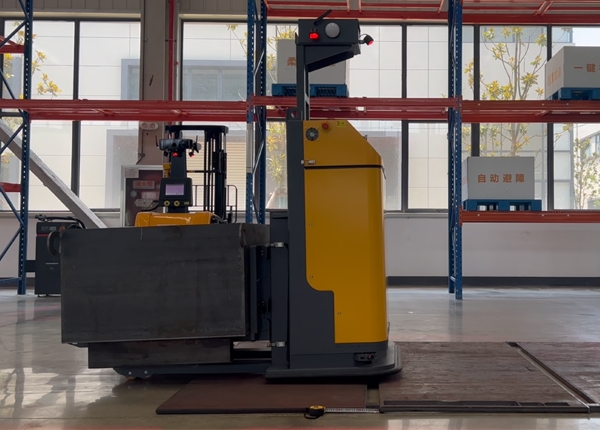
Two AGV forklift quotations can show similar vehicle prices while describing very different projects. One proposal may include fleet control software, warehouse-system interfaces, commissioning, training, and acceptance testing. Another may price only the vehicles and list the remaining work as optional or customer-supplied.
For warehouse operators, the goal is to compare proposals on the same operating requirements and scope. A structured evaluation makes gaps visible before they become schedule changes, extra costs, or disputes during commissioning.
Before comparing prices, give each supplier the same load data, layout, movement requirements, operating schedule, and project assumptions. Ask each supplier to identify any assumptions or exclusions in its proposal.
Compare the following against your actual application:
Rated load capacity under the required load conditions.
Required lift height and the applicable load-capacity limits.
Vehicle dimensions, fork configuration, and aisle compatibility.
Pallet dimensions, fork-entry direction, and load stability requirements.
Navigation suitability, route constraints, and handover accuracy.
Expected operating schedule and required transport performance.
Do not compare a vehicle’s maximum specification with another vehicle’s performance under a different load condition. Ask suppliers to confirm suitability for the same representative operating tasks.
Identify every cost category and confirm whether it is included, excluded, or subject to later assessment. A low initial quote may not represent the lowest total project cost if essential software, site work, or integration tasks are omitted.
| Cost Category | What to Confirm |
|---|---|
| Vehicles | Model, quantity, configuration, and included accessories. |
| Software | Fleet control, licenses, interfaces, and future expansion terms. |
| Integration | WMS/WCS work, PLC interfaces, testing, and customer IT responsibilities. |
| Installation | Freight, unloading, installation, travel, and commissioning. |
| Ongoing support | Warranty, spare parts, maintenance, remote support, and service rates. |
Ask for a clear description of how transport tasks enter the fleet control system and how completion status returns to the warehouse system. Confirm which interfaces are standard, which require customization, and which depend on third-party software or equipment.
Clarify responsibility for API documentation, PLC signal mapping, network access, test data, error handling, and changes to the customer's WMS or WCS. If a supplier states that integration is supported, ask what has actually been included in the price and what remains subject to technical confirmation.
A proposal should explain how the system will be tested before handover. Look for defined test scenarios, agreed operating conditions, measurable acceptance criteria, and a process for recording and resolving failed items.
Ask whether testing includes representative pallets, normal and peak task conditions, system-interface checks, blocked destinations, and selected recovery scenarios. Confirm whether factory testing and on-site acceptance testing are included and who supplies the people, equipment, and data needed for each stage.
Confirm the estimated manufacturing and delivery schedule, the assumptions behind it, and the events that may change the timeline. Clarify the warranty start date, covered components, exclusions, and the procedure for reporting faults.
For overseas projects, establish how remote diagnostics, spare parts, software updates, and on-site support are arranged. Ask which services are included in the quoted price and which incur additional charges. Avoid relying on general statements such as “global support” without a defined service process.
Score each proposal against the same categories. Assign weights based on project priorities, and record evidence for each score rather than relying on impressions.
Technical suitability for the actual warehouse and load profile.
Completeness and clarity of the commercial scope.
Software and system-integration readiness.
Commissioning plan and acceptance criteria.
Warranty, maintenance, and support arrangements.
Total expected cost under clearly stated assumptions.
Use the matrix to identify questions and risks, not simply to select the proposal with the highest numerical score. A critical technical mismatch should not be offset by a low price in another category.
TECHNICAL — Confirm every proposal uses the same operating requirements.
SCOPE — Mark each item included, excluded, or conditional.
INTEGRATION — Assign responsibility for every system interface.
ACCEPTANCE — Require measurable tests and documented outcomes.
COMMERCIAL — Compare total costs, warranty, and support conditions.
A comparable AGV forklift quotation must describe the same warehouse task, equipment requirements, software responsibilities, implementation scope, and acceptance conditions. Resolve major differences before using price as the deciding factor.
Share your warehouse layout, pallet specifications, movement requirements, and system environment with ZCNest to discuss equipment selection and project scope.
📖 AGV Forklift Guide — Essential manual for selection and safety.
⚙️ How AGV Systems Work — A deep dive into navigation and logic.
⚖️ AGV vs. AMR Comparison — Choosing the right technology for your facility.
💰 AGV Cost and ROI — Evaluating investment and payback periods.












 Chinese
 English





