


AUTOMATED WAREHOUSE CHANGE MANAGEMENT
Warehouse layouts and operating processes rarely remain unchanged. New racks, relocated staging areas and revised traffic routes can affect AGV forklift navigation, task assignments and safety controls. A formal change process helps keep physical operations aligned with the automation system.
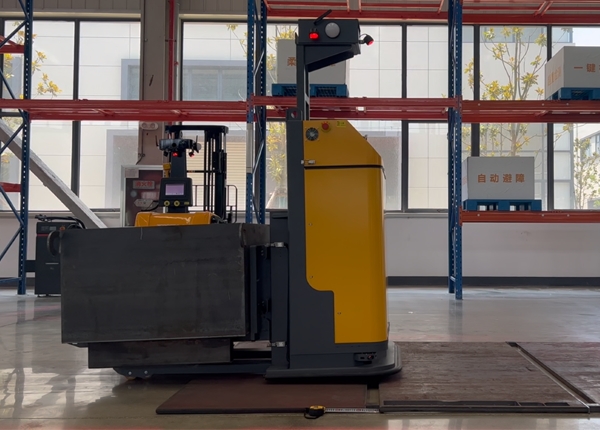
After an AGV forklift system has been deployed, warehouse teams may want to add storage locations, relocate a transfer station, install a new rack or change the direction of a traffic aisle. These changes can appear minor from an operational perspective but may affect the vehicle's approved routes, load-handling clearances and task configuration.
If physical changes are made without updating the relevant system records, the warehouse can end up operating with inconsistent layouts. A location may exist on the floor but not in the warehouse system, or a previously valid route may no longer be suitable for loaded travel.
Change control provides a repeatable method for reviewing, approving, testing and documenting modifications before they affect routine operation.
Not every change carries the same operational impact. A revised inventory label may require a different review from a rack relocation or a change to the vehicle's operating route.
Common change categories include:
Physical layout: rack installation, relocation of staging areas, new barriers or changes to aisle access.
Location configuration: new storage positions, location closures or changes to permitted pallet types.
Traffic and access: revised one-way routes, pedestrian crossings, door access or restricted zones.
Warehouse process: modified putaway rules, new transfer steps or changes to staging procedures.
Software and interface: changes to task fields, status rules, system configuration or integration behavior.
Define which categories require supplier review, safety assessment, software configuration or formal acceptance testing. Changes affecting navigation, load handling or protective functions should not be treated as routine administrative edits.
Each proposed change should have a named owner and a clear business reason. The request should describe what will change, where it will occur, when it is needed and which warehouse activities may be affected.
Require supporting information appropriate to the change. A layout revision may need an updated drawing and site measurements. A software-interface change may require sample messages, test cases and confirmation from the system owner.
Review the request with the relevant stakeholders before implementation. Depending on the change, this may include warehouse operations, safety personnel, IT, maintenance and the AGV supplier.
Document the approval decision and any conditions that must be met before the modified area or process returns to service. Verbal approval alone may be insufficient for changes with significant operational consequences.
Physical changes should be evaluated against the vehicle's operating envelope, intended routes and load dimensions. A newly installed rack or barrier may reduce clearance even if the original aisle width remains unchanged at one measurement point.
Review turning areas, approach paths, transfer stations, doorways and any locations where vehicles maneuver with loads. Confirm whether the modification changes the approved movement area or introduces new obstacles.
Where the navigation system or route configuration requires updating, follow the supplier's documented process. Validate the modified area under controlled conditions before allowing routine loaded operations.
Do not assume that an existing route remains suitable because an unloaded vehicle can pass through it. Loaded operation may impose different clearance and handling requirements.
New or relocated storage positions must be reflected in the relevant warehouse records before the system can use them reliably. Verify the location identity, physical position, permitted load type and any restrictions associated with the new arrangement.
If a location is being closed, check whether inventory remains there, whether pending tasks reference it and whether the system must redirect or cancel those tasks. Do not remove a location from the configuration while it still contains inventory that has not been reconciled.
Review the effect on putaway and retrieval rules. A new storage position may be physically accessible but unsuitable for a particular load, inventory status or task category.
After the update, verify that the warehouse system and fleet controller use compatible location records. Include a controlled test of a task to and from the modified area before opening it for routine work.
Some changes require an aisle to be closed, a transfer station to be unavailable or a group of storage locations to be temporarily removed from service. Plan these restrictions around warehouse demand and communicate them to all affected teams.
Define how pending tasks will be handled before the work begins. Tasks may need to be completed, held, canceled or redirected according to an approved process. Ensure that vehicles do not continue receiving work that depends on a blocked route or unavailable location.
Mark the affected area clearly and verify that temporary barriers or work zones do not create new access or traffic hazards. Establish who is responsible for confirming that the area is ready before automation resumes.
For larger modifications, consider a staged implementation that limits the affected area and makes it easier to verify each change before proceeding to the next stage.
Testing should be proportionate to the risk and type of change. A location-data update may need validation of the location record and a representative transport task. A route or physical-layout change may require a broader review of navigation, clearances, traffic behavior and loaded movement.
Record the expected result, test conditions, observed outcome and any corrective action. If a test fails, keep the change restricted until the cause is understood and the required retest is completed.
Maintain a record of the approved configuration and the date it became effective. This helps the warehouse and supplier determine which layout or software version was in use when a problem occurred.
Where the change affects operator procedures, update the relevant work instructions and brief the affected shifts before the revised process goes live.
The change request includes a clear reason, owner and affected area.
Operational, safety and technical impacts have been reviewed.
Navigation, route and load clearances are verified where relevant.
Location records and task rules are updated consistently.
Pending tasks and temporary restrictions are handled explicitly.
Acceptance tests are completed and documented.
Operating procedures and configuration records are updated.
Key checkpoint: A warehouse change is complete only when the physical environment, system configuration, operating procedure and relevant approvals agree. Updating only one of these elements leaves the operation exposed to avoidable errors.
Before project handover, determine which warehouse changes the customer can manage independently and which require supplier involvement. Clarify responsibilities for location configuration, route updates, software changes, safety review and acceptance testing.
Request the relevant configuration documentation and a practical explanation of the change process. Confirm how requests are submitted, how modifications are tested and how the previous configuration can be identified if an issue appears after an update.
📖 AGV Forklift Guide — Essential manual for selection and safety.
⚙️ How AGV Systems Work — A deep dive into navigation and logic.
⚖️ AGV vs. AMR Comparison — Choosing the right technology for your facility.
💰 AGV Cost and ROI — Evaluating investment and payback periods.












 Chinese
 English





